Protect
Mask ceilings, flooring, surrounding walls, windows, furniture and other nearby surfaces before application begins.

A detailed interior wood painting project focused on careful preparation, controlled spray application and creating a smooth, consistent finish across a decorative accent wall.
Painting a wood accent wall is very different from rolling paint onto standard drywall. Individual wood pieces, joints, edges and the existing finish can all affect how the completed surface looks.
Jakub Construction completed this interior wood accent wall painting project in Calgary's Oakridge community. The project required detailed preparation and controlled application to create an even painted finish across the entire feature wall.
The project was completed in approximately two days, including preparation, primer and finish-coat requirements.
This completed project image shows the actual Oakridge interior, including the painted vertical wood feature surrounding the fireplace and the coordinated finish throughout the living room.
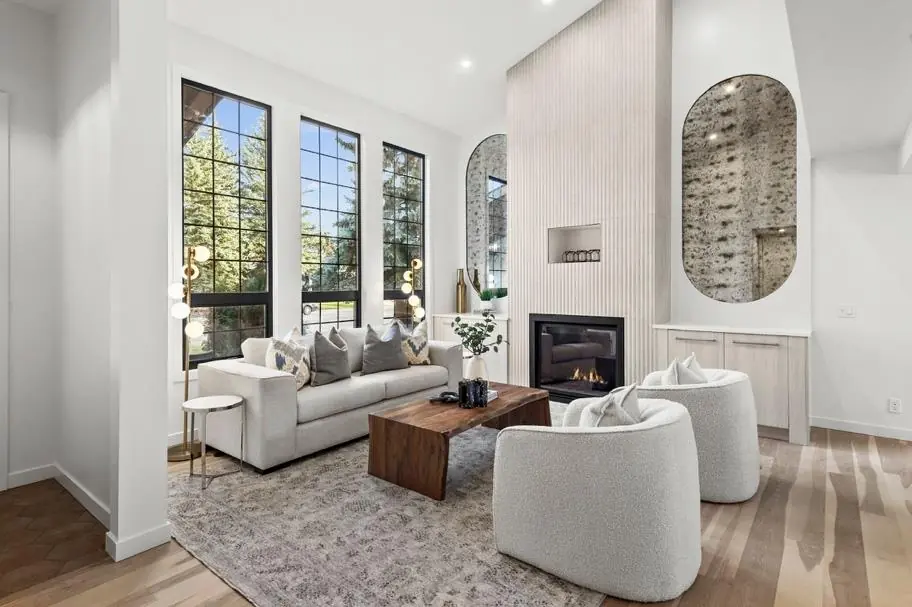
Actual completed-project photography supplied by Jakub Construction, showing the finished Oakridge living room and fireplace feature wall.
The finished appearance depends heavily on how the individual wood pieces, joints and existing surface are prepared before the final coating is applied.
The Oakridge project involved considerations that are specific to detailed wood surfaces, including difficult-to-coat joints, careful edge work, primer selection and controlling spray application around the surrounding room.
Spaces between individual wood pieces can be more difficult to coat evenly than a flat drywall surface.
Sanding and preparation help create a smoother, paint-ready surface before primer and finish coats are applied.
Bare, stained and previously finished wood can require different primer and preparation approaches.
Wood profiles, corners and detailed areas require controlled application to maintain uniform coverage.
Fine particles can settle into wet coatings and affect the final appearance if the work area is not appropriately controlled.
A professional finish comes from controlling each stage of the project rather than treating the wall like a standard painted surface.
Mask ceilings, flooring, surrounding walls, windows, furniture and other nearby surfaces before application begins.
Prepare the existing wood surface so it is smoother and suitable for the coating system being applied.
Select primer based on whether the wood is bare, stained or already finished.
Apply the coating with controlled technique to reduce runs, drips and uneven coverage.
Allow appropriate drying and recoat time between primer and finish coats.
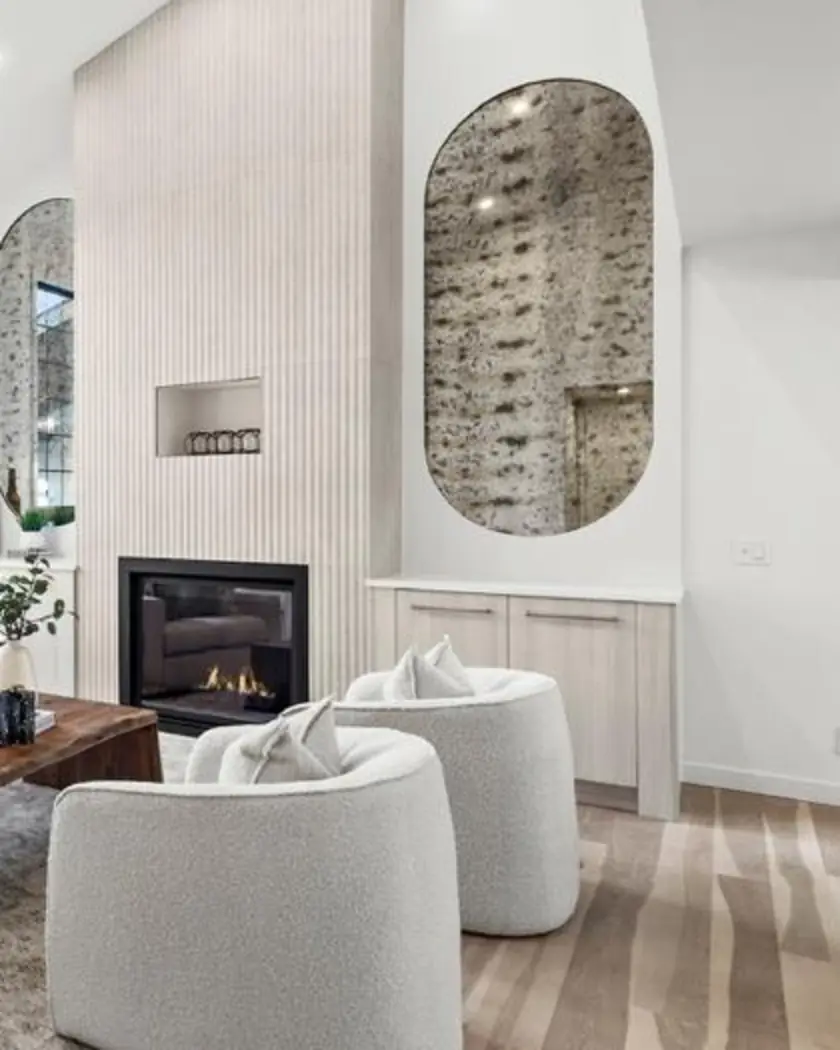
A decorative wood wall creates depth through individual boards, strips or profiles. Those same details also create more surfaces for the coating to reach.
Gaps and joints between the wood pieces can be more difficult to coat evenly. Detailed edges also need careful application so the finished colour appears consistent across the face and recessed portions of the feature.
The objective is not to remove the wall's architectural detail. It is to give those details a cleaner, more uniform painted appearance.
Painting changes the colour and finish, but it does not necessarily remove the physical lines, gaps or dimensional details between individual wood pieces. Those features can remain part of the wall's design.
Spray application can be useful for detailed wood surfaces, but it also increases the importance of preparation and environmental control.
The documented considerations for this project included protecting surrounding surfaces, controlling spray mist, ventilation, dust control and using appropriate spray technique to avoid runs, drips and uneven coverage.
The finish also needs to remain consistent across the entire feature wall, including edges and detailed areas where coating thickness can otherwise vary.
Ceilings, flooring, surrounding walls, windows and furniture need protection from spray mist.
Air movement and ventilation need to be considered during spray application.
Airborne particles can settle on a wet finish and affect its smooth appearance.
Controlled application helps reduce runs, drips, uneven coverage and excessive coating build-up.
This Oakridge wood accent wall project was completed in approximately two days.
Another project may take more or less time depending on the size and complexity of the feature wall, existing finish, preparation requirements, masking, primer selection and required drying or recoat times.
Stained or previously finished wood may be paintable, but the existing finish should be considered when determining the preparation and primer required.
Primer requirements depend on the surface. Bare, stained and previously finished wood can require different preparation and primer approaches.
The best application method depends on the wall's design and finish requirements. Spraying can help coat detailed surfaces uniformly but requires careful masking and technique.
Stained or previously finished wood may be suitable for painting, but the existing finish affects the preparation and primer required. The surface should be evaluated before the new coating system is selected.
Sanding can be part of preparing the existing wood to create a smoother, paint-ready surface. The amount of preparation depends on the wood and existing finish.
Primer selection depends on whether the wood is bare, stained or previously finished. The existing surface should be considered before determining the appropriate primer.
Spray application can be used on detailed wood surfaces. Careful masking, ventilation, dust control and spray technique are important to control overspray and achieve an even finish.
Surrounding ceilings, flooring, walls, windows, furniture and other nearby surfaces need to be appropriately masked and protected. Spray mist and ventilation also need to be controlled during application.
Dust and other particles can settle on a wet coating and affect the smoothness of the final finish, making control of airborne contamination important during spraying and drying.
Timing depends on the size and complexity of the feature, existing surface and coating system. This Oakridge accent wood wall project was completed in approximately two days.
Jakub Construction provides residential interior painting for Calgary homeowners, from detailed feature walls to complete interior painting projects.
Projects can include walls, ceilings, wood features, trim, doors, baseboards, cabinets and other interior painted surfaces.
Tell us about the wall, its existing finish and the look you want to achieve. Jakub Construction can assess the surface and provide a project-specific quote based on the preparation and finish required.
See what homeowners across Calgary are saying about their experience working with Jakub Construction on residential painting, drywall and stucco projects.
At Jakub Construction, we believe great painting starts with a great conversation. Tell us about your project goals, your style, and your space and we’ll take it from there. Whether you’re planning a full home repaint or just want to freshen up a few rooms, our team is ready to help. Contact us today to book your free painting consultation in Calgary, Airdrie, Cochrane, or Okotoks.